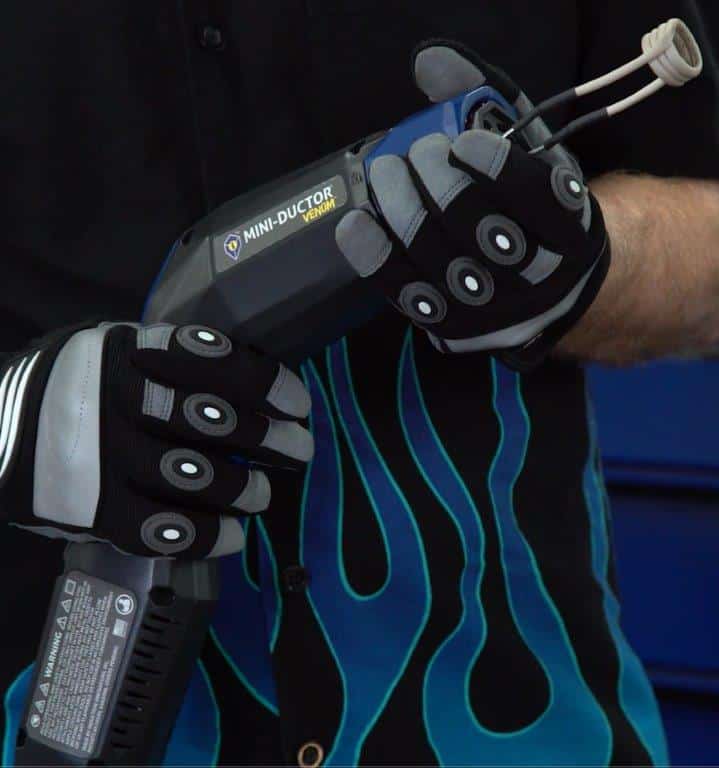
Induction heating uses electromagnetic fields to generate heat directly inside metal without flame, contact, or collateral damage. If you’re trying to break loose a seized bolt, remove a dent, or soften an adhesive, a Flameless™ induction heater gets the job done faster and more safely than a torch.
Induction Innovations invented the handheld magnetic induction heater and has been the industry standard for over 20 years. Every tool we offer is proudly designed and made in the USA.
The science behind magnetic induction heating
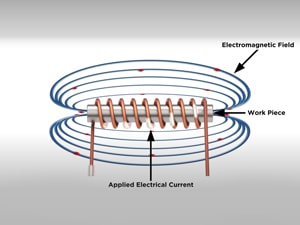
A power supply sends high-frequency alternating current through a coil, creating a rapidly changing magnetic field. Place any conductive metal near that coil and the field induces eddy currents inside the material (resistance to those currents generates heat from within). In ferrous metals like steel and cast iron, magnetic hysteresis adds a second layer of heating, which is why a steel bolt can reach red-hot temperatures in seconds.
Three things follow from this:
- No contact required: heat is generated inside the workpiece, not transferred from a flame or hot surface, so surrounding components stay protected
- Localized heat: the field only affects metal inside or near the coil, giving you precision a torch can’t match
- Surface-first heating: at the frequencies induction tools use, eddy currents concentrate near the surface, which is exactly where you need heat to break corrosion or loosen a bond
Ferrous vs. non‑ferrous metals: what materials work best?
Induction heating works on any electrically conductive metal, but ferrous metals like steel, cast iron, and alloy steels heat significantly faster because their magnetic properties add hysteresis heating on top of eddy current heating. Non-ferrous metals like aluminum, copper and brass still heat, just more slowly. In practice, this means induction is ideal for steel fasteners and panels, and still useful for warming aluminum to remove decals or bonded trim, but it’s not the right tool for brazing copper.
Benefits of magnetic induction heaters
Compared to a torch, induction heating is faster, safer, and cleaner:
- Speed: heat is generated directly inside the metal, not transferred from an external source. The Venom® HP cuts labor time by up to 75% and heats up to 50% faster than previous models.
- Precision: heat stays localized to the coil area, so you’re not cooking adjacent wiring, plastic, or paint.
- Flameless™ heat: no open flame, no fire risk, no hot surfaces.
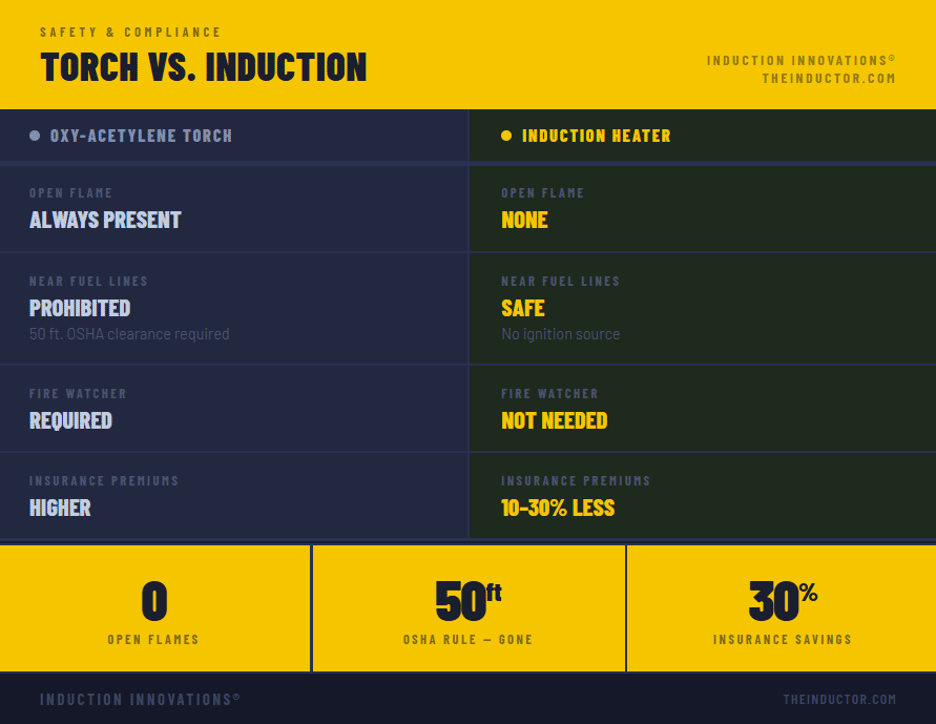
- Lower insurance costs: shops switching from oxy-acetylene torches typically save 10–30% on premiums.
- Cleaner operations: no combustion byproducts, no noise.
Applications
Automotive and maintenance
Induction heat excels at freeing seized fasteners, bearings, and fittings like brake bleeder nuts, exhaust bolts, O₂ sensors, lug nuts. It also softens adhesives for decal and graphic removal, and because there’s no flame, you can work near fuel lines without moving the vehicle.
Manufacturing, agriculture, and heavy equipment
Higher-output tools handle thicker stock like rusty combine bearings, CNC machine components, bonded trim, and spray-on bed liners. Induction can also expand bearings for assembly and heat-treat or harden parts.
Paintless dent repair (PDR)
Induction heating changed how dent repair is done. Heat is applied externally through the panel, expanding the metal so it relaxes back into shape without drilling, interior trim removal, or paint damage. Works on both steel and aluminum.
Safety and best practices
Induction heaters deliver Flameless™ heat, which means OSHA rules governing torches, clearing combustibles, maintaining 50-foot clearance from flammable liquids, posting fire watchers, simply don’t apply. You can work near fuel lines, rubber hoses, and plastic components without risk.
To get the most out of your coils and keep things running safely:
- Choose the right coil size: a close fit heats faster; too large or too small slows heating and risks overheating the insulation
- Don’t let the coil touch the workpiece: direct contact burns the insulation
- Use short cycles: 5–20 seconds on, then check. Repeat as needed rather than running continuously
- Wear safety glasses and follow manufacturer guidelines
- Replace worn coils: fraying, slow heating, or a burning smell means it’s time for a new one
Choosing the right tool
The Mini Ductor® II and Venom deliver 1,000 W; the Venom® HP delivers 1,800 W. All three are made in the USA and built for everyday automotive work, seized bolts, O₂ sensors, bearings, and decal removal. Flexible coils bend into tight spaces, and battery-powered models (MD 500) are available for field work. View Mini Ductor® models →
Inductor® Pro Max and PDR kits for body shops and heavy-duty use, the Inductor® Pro Max delivers over 2,000W on a standard 120 V/20 A outlet, no special wiring required. PDR kits include the Baton and Concentrator attachments for precise dent shrinking and expanding. Made in the USA, UL/CSA listed, two-year warranty. View Inductor® models →
Coils and accessories Pre-formed, U-form, and flexible Bearing Buddy® coils are available in dozens of sizes. Match the coil to the job; a closer fit heats faster. View coil kits →
Conclusion
Induction heating is a faster, safer alternative to torches for freeing seized fasteners, removing dents, and releasing adhesives without the fire risk, the OSHA overhead, or collateral damage. Every Induction Innovations tool is made in the USA and delivers Flameless™ heat – no torch, no fire risk, no compromise. Explore our full product line to find the right tool for your shop.
-

August 5, 2026
Shop ROI: How Induction Heating Cuts Labor Time and Increases Throughput
Every job that sits on the lift longer than it needs to is money walking…August 5, 2026
Shop ROI: How Induction Heating Cuts Labor Time and Increases Throughput
Every job that sits on the lift longer than it needs to is money walking… -

September 10, 2025
What is Induction Heating? How It Works, Benefits & Tools
Induction heating is a fast, precise, and Flameless® method of heating electrically conductive materials using…September 10, 2025
What is Induction Heating? How It Works, Benefits & Tools
Induction heating is a fast, precise, and Flameless® method of heating electrically conductive materials using… -
August 12, 2025
How Induction Heating Works: Technology, Benefits & Applications
Induction heating technology is transforming industries by providing fast, efficient, and precise heating solutions. Whether…August 12, 2025
How Induction Heating Works: Technology, Benefits & Applications
Induction heating technology is transforming industries by providing fast, efficient, and precise heating solutions. Whether… -
March 14, 2025
The Benefits of Buying American-Made Induction Innovations Products
When you choose American-made induction heating tools from Induction Innovations, you’re not just purchasing a…March 14, 2025
The Benefits of Buying American-Made Induction Innovations Products
When you choose American-made induction heating tools from Induction Innovations, you’re not just purchasing a…